Understanding the habit. Supporting positive change.

Hypnotherapy for Thumb Sucking: A Gentle Approach to Understanding Childhood Habits

Thumb sucking is a common childhood habit, and children may engage in it for different reasons and at different stages of development. For some families, the habit changes naturally over time. For others, parents may wish to explore supportive approaches based on their child’s individual circumstances.

15+Years of experience
2,400+Sessions conducted
A relaxed young child sitting quietly with a thumb resting near the mouth.

No shame. No punishment. No promises of guaranteed results — only respectful, individual support.

Understanding the habit

A familiar behaviour, with a different story behind every child

Thumb sucking is one of the most common behaviours of early childhood. Long before a baby can speak, reach or walk, the mouth is one of the first ways a child explores the world and settles themselves. For many children, bringing a thumb to the mouth simply becomes part of that early vocabulary of comfort.

Over time, what began as an instinctive movement can become woven into daily life: the quiet moment before sleep, the pause in a car journey, the settling-in period at a new school. The behaviour looks the same from the outside, but what surrounds it can be quite different from one child to the next — and that is exactly why a single explanation rarely fits every family.

Understanding usually comes before change. Noticing when a habit tends to appear, what happens just before it, and how a child responds afterwards often tells parents far more than any general rule could.

Not every habit needs intervention

Not every child who sucks their thumb requires intervention, and the significance of the habit can depend on factors such as the child’s age, frequency, intensity, developmental stage and individual circumstances.

Some habits may change naturally over time. Where a parent or caregiver does have concerns — about oral health, comfort, development or persistence — an appropriately qualified healthcare or dental professional may be able to offer guidance based on that child’s situation.

What this website is for

These pages are written for parents and caregivers who would like clear, calm, non-judgmental information — and who want to understand the child behind the habit before considering any approach at all.

Every child is different

The same behaviour can look very different from one child to another

Two children can share the same habit and have almost nothing else in common about it. These are some of the ways thumb sucking varies — not a checklist, and not a way of measuring a child.

Variation 01

Frequency

Some children may suck their thumb only occasionally — a few moments in a whole day, barely noticed by anyone. Others may do so more regularly, returning to it several times across the day. Frequency on its own does not tell you whether a habit matters; it is simply one part of a wider picture that includes age, context and the child’s own comfort.

Variation 02

Context

The habit may appear around sleep, tiredness, boredom, quiet moments, familiar routines or periods of adjustment such as starting nursery or moving home. Noticing when it tends to happen is often more useful than counting how often. Context is information, not evidence of a problem.

Variation 03

Duration

Patterns may change naturally over time. A habit that seemed constant one season can fade in another without anything in particular being done, while for some children it stays longer. Change is rarely a straight line, and a temporary return of an old habit does not undo the progress a child has already made.

Variation 04

Individual meaning

The same behaviour may have different contexts for different children. For one child it may be closely tied to falling asleep; for another it may appear mostly when they are absorbed in something. Thumb sucking does not have one specific emotional cause, and it should not be read as a sign that something is wrong at home or within the child.

A gentle pathway

Understanding first. Then, if it is right for your family, gentle support.

There is no single correct route through a childhood habit. This is simply one calm way of thinking it through — one that keeps the child’s dignity at the centre.

Illustrative only

This pathway is illustrative only. Every child’s circumstances and progress may be different, and there is no expectation that any family will move through it in this order — or at all.

Observe

Notice when and where the habit tends to occur, without commenting on it in the moment. A few days of quiet noticing usually reveals more than weeks of worrying.

Understand

Consider routines, patterns and individual circumstances — sleep, tiredness, transitions, quiet moments — and what the habit seems to sit alongside in your child’s day.

Discuss

Where appropriate, discuss concerns with relevant qualified professionals. A dentist, doctor or other appropriately qualified professional can consider your child’s individual situation in a way that no website can.

Explore

Consider suitable supportive approaches. Some families make small adjustments at home; some involve their child in setting a goal; some choose to explore hypnotherapy where it may be appropriate.

Support

Encourage a positive, respectful and individual process. Progress can vary, and a child who feels supported rather than corrected is usually a child who stays willing to keep going.

Where may hypnotherapy fit?

One possible approach — considered carefully, never assumed

Some parents choose to explore hypnotherapy as one possible approach to supporting habit change, where that is appropriate for their child. It is not a first step, a necessary step, or a step that suits every family.

Depending on the individual child, the approach taken and questions of suitability, sessions may involve elements such as:

Relaxation Imagination Focused attention Positive imagery Child-friendly communication Goal-oriented discussion

These elements may be explored where they are appropriate for a particular child. They are not a promise that thumb sucking will stop, and individual suitability varies. The experience of hypnotherapy differs from one person to another.

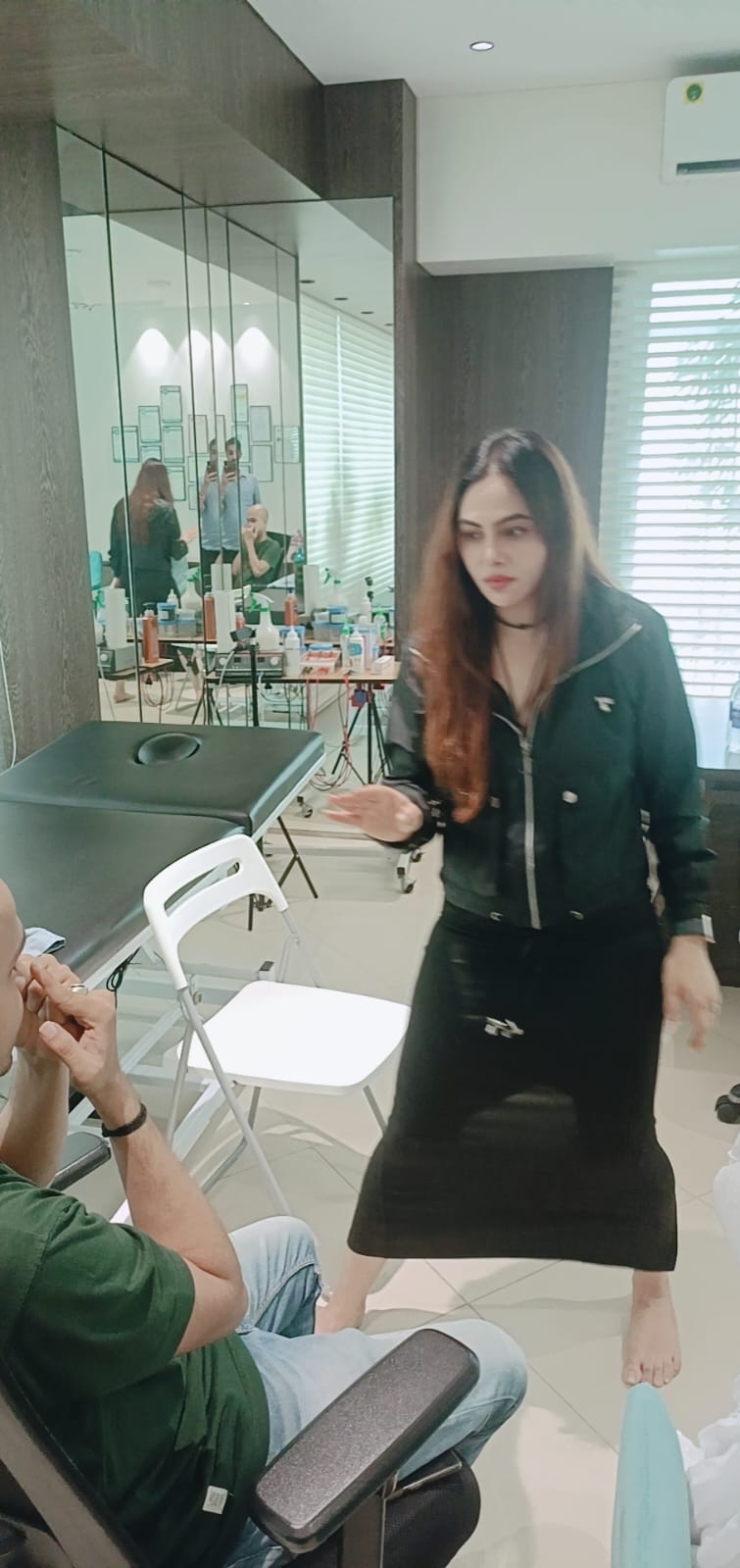
Vibha Jain explaining a relaxation technique in the practice room during a group session.
Vibha Jain guiding a relaxation exercise during a group session.

Experience

Years of listening, one family at a time

Experience does not guarantee an outcome for any individual child. What it does offer is a practitioner who has heard a great many different stories — and who therefore starts by asking, not assuming.

15

Years of Experience

Working with individuals and groups across a range of concerns.

2,400

Sessions Conducted

Every session begins with the individual in front of her.

Portrait of Vibha Jain, hypnotherapist at Hypnotherapy Pvt Ltd.

Meet the practitioner

Vibha Jain

Vibha Jain is the hypnotherapist behind Hypnotherapy Pvt Ltd, with 15+ years of experience and 2,400+ sessions conducted.

Her approach with families rests on a few simple commitments: understand the individual circumstances first, communicate respectfully with both parent and child, keep expectations realistic, and be clear about what an approach can and cannot offer. Where hypnotherapy is not suitable, saying so plainly is part of the work.

  • Listening before suggesting
  • Parent-friendly, jargon-free communication
  • Respect for the child at every stage
  • Honest, realistic expectations

Begin with a conversation

Have a question about your child’s thumb-sucking habit?

You are welcome to get in touch and ask. A conversation costs nothing but a few minutes, and it is the only honest way to consider whether an approach might suit your child at all.